Sahara Desert
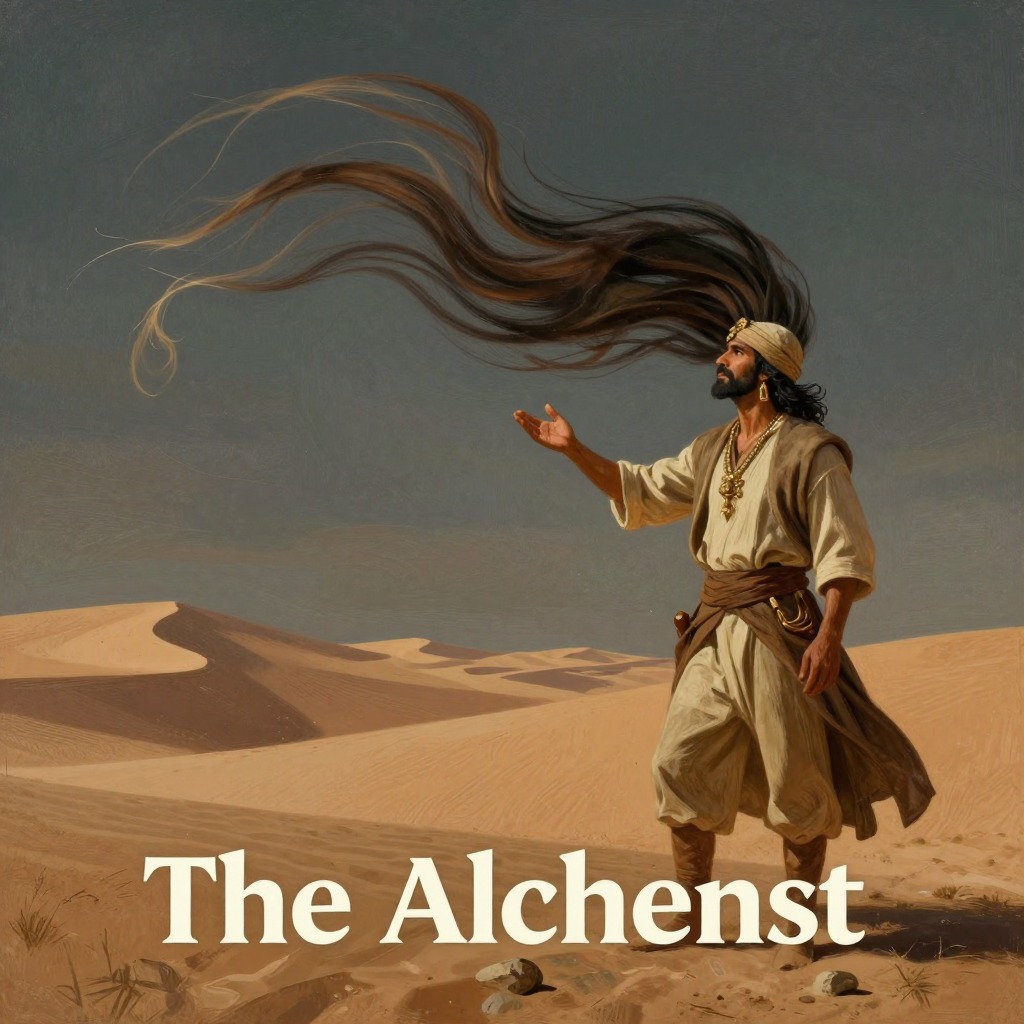
The Sahara Desert is the immense, unforgiving landscape that forms the central stage of Santiago's quest in The Alchemist. Stretching for thousands of kilometers between Tangier and the Pyramids of Egypt, it is far more than a geographical barrier; it is a living, capricious entity with its own soul, a teacher of patience and courage, and the ultimate testing ground for anyone pursuing their Personal Legend. The desert's silence, its shifting sands, and its harsh laws govern every step of the journey, demanding that those who cross it learn to read its omens and respect its power.
Geography and the Threshold of the Journey
The Sahara first enters Santiago's consciousness as a daunting abstraction. When he arrives in Tangier, a young man tells him, "You have to cross the entire Sahara desert," and that to do so requires substantial money. The sheer scale of the desert is emphasized by the crystal merchant, who laughs at Santiago's plan to reach Egypt in a day, explaining that there are "thousands of kilometers of desert between here and there." This vastness transforms the Sahara from a mere location into a threshold that separates Santiago from his goal, a space that cannot be rushed or conquered by will alone. The desert is also the reason the caravan must pass through Al-Fayoum, which is in Egypt, making the oasis a necessary waypoint on the route to the Pyramids.
The Desert as a Living Teacher and a Realm of Omens
Once the caravan departs, the Sahara reveals itself as a conscious, communicative presence. The camel driver explains that the desert is so huge and its horizons so distant that "they make a person feel small, and as if he should remain silent." Santiago learns to observe its language: the caravan makes detours around boulders and salt flats, but always returns to its course, sighting on a star that indicates the location of the oasis. The desert tests the caravan's every step, and the guides read its signs. The alchemist later tells Santiago that the desert is the best teacher there is, and that one must "love the desert, but never trust it completely," because it "challenges every step, and kills those who become distracted." This teaching culminates when the alchemist instructs Santiago to "immerse yourself in it," explaining that by contemplating a simple grain of sand, one can see all the marvels of creation. The desert is thus not a void but a repository of the Soul of the World, where omens—like the flight of hawks—are messages to be read.
The Desert's Role in Santiago's Transformation
The Sahara is the crucible in which Santiago's character is forged. It is during the crossing that he befriends the camel driver, who teaches him to live in the present moment, and the Englishman, who introduces him to the theoretical side of alchemy. The desert's silence forces Santiago to confront his own heart, leading to the profound conversations with the alchemist about fear, love, and destiny. The most dramatic transformation occurs when Santiago, facing death at the hands of a hostile chief, must turn himself into the wind. He does so by speaking to the desert itself, asking for its help. The desert agrees to give its sands to the wind, but admits it cannot do the work alone. This dialogue with the desert is the final step in Santiago's mastery of the Language of the World, allowing him to perform a miracle that saves his life and proves his spiritual evolution.
The Desert as a Symbol of the Journey's End and Beginning
The Sahara also frames the narrative's conclusion. After the alchemist departs, Santiago rides alone through the desert for several hours, listening to his heart, which tells him, "Be aware of the place where you are brought to tears. That's where I am, and that's where your treasure is." He climbs a dune and sees the Pyramids. Yet the desert's final lesson is one of irony and circularity. When Santiago is beaten by refugees from the tribal wars, the leader reveals that he, too, had a recurrent dream—of a treasure hidden in Spain at the roots of a sycamore tree in an abandoned church. The leader mocks Santiago for being "so stupid as to cross an entire desert just because of a recurrent dream." This revelation forces Santiago to realize that his treasure was never in the desert at all; the desert was the path he had to travel to find it. The Sahara, in its vastness and danger, was the necessary ordeal that transformed a simple shepherd into a man capable of understanding his own destiny.